
PETROLEUM INDUSTRY ACT 2021 AND THE DECADE OF NATURAL GAS MANTRA IN NIGERIA: A CEREBRAL PERSPECTIVE
By Omowunmi Iledare, PhD (GNPC Professor & Chair in Petroleum Economics)
Preamble
Nigeria has declared natural gas as a commodity of value and the decade of gas intonation has been complementarily reinforced in the Petroleum industry Act 2021 (PIA 2021). The PIA 2021 for the first-time, attempts to decouple oil and gas and change the narrative of the old saying, “what is worse than drilling a dry hole is finding natural gas, when you drill a well.” Thus, decoupling oil and gas in the PIA 2021 is a recognition of the differences in the relative value mix and the complexities of the oil and gas value chains. Though, they are often found together in the exploration and exploitation process for hydrocarbons, but a great proportion of natural gas discovered in Nigeria, over the years, occurred accidentally, in the process of searching for oil. Nigeria, with the decade of gas mantra, seems very responsive to the transition to carbon emissions energy resources to forestall global warming below what it was in the 1990s.
Natural gas fits very well its characterization as the global energy transition fuel. It is the most environmentally friendly of fossil fuels with the lowest carbon emissions per unit of energy. The favorable disposition of PIA 2021 to promote natural gas development and utilization in Nigeria is quite noble. It is a recognition that energy availability, affordability and security are critical to expanding economic output, create jobs and perpetuate the circular income, thereby reducing or eliminating misery index (high unemployment, high inflation and high interest rates). Thus, the transformation of the global energy systems from fossil fuels to renewable energy makes strategic implementation of PIA 2021 provisions regarding Natural gas development in Nigeria, consequential.
This op-ed aims to describe natural gas domestic supply challenges, impediments to natural gas market development before the PIA 2021. It proffers solutions to natural domestic supply, utilization, and pricing challenges and highlights relevant PIA provisions of significance that would enable natural gas potential to expand Nigeria economy in the global energy transition era. Further the op-ed discusses the opportunities PIA 2021 presents in the drive towards increasing domestic gas reserves, production, and utilization.
Domestic Natural Gas Market Challenges and PIA 2021 Stratagems
Nigeria is endowed with abundant natural gas resources estimated at about 600 TCF 2P reserves. To date, most developed and undeveloped natural gas reserves were discovered while searching for liquid hydrocarbons. It has become an acceptable statement that Nigeria is a natural gas province with just droplets of oil and condensate fields. However, the natural gas value chain is much more complex than the petroleum value chain, especially when it comes to the movement of natural gas from sources to end-use destinations. The supply complexity is complicated from upstream through the midstream to the downstream in terms of the supply structure, infrastructure development, and finance availability.
The structure of the domestic natural gas supply rests squarely on a functioning end-use market a guaranteed long-term deliverability of natural gas to end users—power plants, industrial parks, and export market outlets. The end-use market in Nigeria is still evolving and power plants lack the capability to take gas, and evacuate power along the value chain, optimally. Optimality along the value chain depends on adequate infrastructure. There are inadequate pipelines infrastructure and the few available are subjected to because of insecurity. Financing natural gas value chain is very complex with significant legacy debts power plants owed suppliers because they lack payment saucerization from end-users. PIA 2021 recognizes these issues affecting the natural gas value chain in Nigeria, and to a large extent, addressed them squarely as follows.
First the PIA 2021 establishes efficient and effective governance institutions—Minister, NNPC Limited, Commission, and the Authority, with clear and separate roles for the oil and gas industry and its operations. One of the responsibilities of the office of the minister mandated in the PIA is to promote an enabling environment for investments in Nigeria oil and gas industry, which would address the financial challenges in the gas value chain with the backing of the law. Secondly, PIA 2021, anchored mostly, on Nigeria Gas Policy 2017, offers strategic frameworks to optimize natural gas market value chain through gas to power, gas-based industrial parks, and high value gas export.
Further, one of the objectives of the Authority with relevance to domestic gas supply is to promote the supply and distribution of natural gas in midstream and downstream operations and the security of natural gas supply for the domestic market. Thus, the authority according to section 33 (o, p, q) may make regulations subject to section 216 of the PIA concerning domestic supply and demand, trading and export of natural gas and ensuring its availability and security.
To address domestic gas infrastructure inadequacy in Nigeria, PIA 2021 establishes the Midstream and Downstream Gas Infrastructure Fund, which resides in the Authority as mandated in section 52. The fund exists to facilitate investment partnership of the government with private investments to increase domestic natural gas consumption, encourage private investment with guaranteed low exposure to investment failure, and to promote flared gas commercialization, as evident in section 52 (10). Section 64 (e), whether right or wrong, vested the rights to PSC natural gas production to NNPC Limited with a clear mandate in 64 (i) to promote the domestic use of natural gas through the development and operation of large-scale gas utilization industries in view of the decade of gas pronouncement.
Section 110 of PIA 2021 further reiterates the commitment of the government to expand domestic gas utilization in a large industrial scale. The understanding is clear the large-scale industry utilization requires sustainable deliver of natural gas. PIA 2021 gives the Commission the mandate to prescribe and allocate the domestic delivery obligation to lease holders based on gas demand requirements annually and ensure compliance with a prescribed penalty of US $3.50 per MMBtu for failure to comply. Of course, this is not a perpetual obligation. There is a sun set under section 167 (3) in anticipation of a fully matured domestic gas market in Nigeria. Hence, the good news in all of this is that PIA 2021 embraces the idea that natural gas supply can create its own demand. Chart 1 illustrates the circular flow of natural gas from supply to demand through expanding access infrastructure and capacity, which PIA 2021 envisaged in its design.
Domestic Natural Gas Pricing Challenges and PIA 2021 Rational Provisions
Globally speaking, the price of natural Gas depends on location, end-use type, and supply sources. The pricing complexity of natural gas is basically due to transportability from source to end-use destinations. Nevertheless, the fundamentals of demand and supply are governed majorly by access and size of participants. In the more developed economies, there are three dominant gas end users, residential and commercial, industrial, and electric power with significant price differentials. To some great extent, natural gas pricing mechanism is still very much linked to the price of crude oil, but evidence of oil-gas price decoupling is emerging because shale gas development and production expansion in the United States.
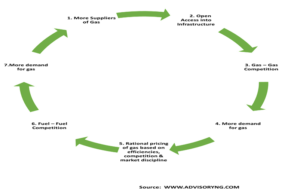
Chart 1: Circular Flow Natural Gas Supply and Demand
Perhaps, the gas market in Nigeria is still evolving, in the real sense of it. Most large-scale domestic use of natural gas in Nigeria exists to reduce or eliminate gas flaring through gas to power investments, large-scale gas-based industries—CNG, mini-LNG, fertilizer, petrochemicals and high value export markets hoping that PIA would launch an efficient and effective pricing mechanism for value optimization of investments. In addition, strategic implementation of PIA 2021 is required, having decoupled natural gas value chain into three distinct but interrelated business units—upstream, midstream, and downstream.
The regulator must pay attention to the highly concentrated and oligopoly market structure in the upstream sector with no incentive for supply concentration in the pricing framework, it recommends. In the midstream, PIA suggests the need for the Authority to be watchful of the presence of integrated market power that can easily lead to market inefficiency anchor on limited infrastructure. The natural gas downstream market is dominated by gas to power end user and facing financial recklessness of off takers. In the aggregate, this end-use act as monopsony buyer foxed with limited supply and in competition with NLNG who has the first right of refuser.
It is now more likely, but for the conjectural initial wrong signals, that PIA offers the restitution of outdated legal, regulatory, and institutional framework. In addition, it shows a departure from the deep-rooted weakness in the enforcement of market regulations and has provisions to promote optimal commercial and pricing frameworks. It is striking that the function of the authority is not to set the price or tariff as stated in section 32 of the PIA. Th Authority is not a price fixing regulator. The responsibility of the Authority is to determine appropriate tariff methodology (32(c)) and provide pricing and tariff frameworks for natural gas in midstream and downstream gas operations. Balancing emotion with logic is critical in this initial phase when designing optimal pricing strategy in an oligopoly or monopoly entrenched market structure existing before PIA became effective. The important caveat is having human capital resources that are resourceful and with good understanding of the concept of technical, commercial, and economic regulations in the Authority and Commission. This may call for sacrificing political expediency in staff recruitments and postings for regulatory efficacy to avoid regulatory failures and elite capture.
Expanding Natural Gas Reserves and Challenges and PIA 2021 Logical Provisions
Nigeria ranks among the top 10 and top 20 countries in terms of proved reserves and annual extraction rate, respectively. Nigeria natural gas reserves in 2020 accounted for over 100 years of 2020 gas production but representing just about 21 percent of gas production in Africa. PIA 2021 addresses this underproduction of natural gas by the horn with logical provisions that are investor friendly to a fault, in my opinion. The natural gas resource base in Nigeria, appears to be almost limitless. It seems to be a strategic energy resource, more so, in this era of global energy transition from fossil fuels to zero-carbon fuels. It is an invaluable energy resource for long- term economic planning, economic growth, energy planning and administration, and sustainable development in Nigeria. This is of course, subject to the quality of the design and implementation of the legal, regulatory, and institutional framework in the PIA 2021.
Four important issues to address in terms of natural gas reserves expansion and supply outlook are bankability of natural gas assets, investment performance enhancements, appropriate regulatory institutions for industry governance, and balancing optimally stakeholders’ mutuality of interests, especially, petroleum host communities. To a large extent PIA 2021 addressed these issues. The Act creates and empowers the Commission and Authority to pursue efficient and effective governance and regulatory frameworks for optimal petroleum industry licensing and granting access to resources for exploration and development in a transparent and accountable manner.
Further, the Act establishes a framework to create a commercially oriented national company with a less risk averse attitude. To make natural gas assets bankable, government shows its penchant for gas development. The PIA fiscal framework in PIA 2021 excludes upstream gas companies from paying Nigeria hydrocarbon tax and the royalty rate on gas production is flat and low. The introduction of a well-articulated chapter on host community development fund, not only portrays the relevance of host community, but in the long run facilitates easiness in the establishment of Gas-Based Industrialization Parks in the Niger Delta.
Concluding Remarks and Observations
PIA 2021 has a robust strategic framework that is focused on maximum economic impact through gas development with less emphasis on early revenue. The aim to drive linkages with agriculture, manufacturing and dispersed small enterprise through gas to power is noble. The fiscal framework favors gas development with incentives for more market participants along the value chain. The terms and instruments are friendly to investors with specification of appropriate regulatory, governance, and enforcement strategies. The caveat remains the critical manpower required to implement the Act. Nigeria is recognized as being very astute when it comes to fashioning policy and laws that can add value to the nation. Unfortunately, often outstanding laws and policies fail quite woefully, to achieve noble objectives because of transactional leadership mindset. One can only hope, PIA becomes an exception. Time will tell.