
THE FUTURE OF OIL AND GAS ECONOMY IN NIGERIA: PLAUSIBLE PETROLEUM VALUE CHAIN PROSPECTS IN THE PETROLEUM INDUSTRY ACT (PIA 2021) ERA
THE FUTURE OF OIL AND GAS ECONOMY IN NIGERIA: PLAUSIBLE PETROLEUM VALUE CHAIN PROSPECTS IN THE PETROLEUM INDUSTRY ACT (PIA 2021) ERA
By Omowumi O. Iledare, PhD, Professor Emeritus, LSU Energy Studies, USA, GNPC Petroleum Commerce Chair, UCC Institute for Oil and Gas Studies, GH, and Executive Director, Emmanuel Egbogah Foundation, Abuja, NG.
Preamble
It has been over one year since the PIA 2021 came to an effect. In an op-ed published in this December edition of the EEF News Digest, a narrative of the key issues, constraints and challenges arising from the Act was provided. Also espoused the op-ed are the drivers and determinants of these issues and constraints and plausible resolutions to observable PIA 2021 implementations flaws were proffered. The op-ed intimated that these perceptible implementation flaws, if not bettered, have the potential to diminish the PIA 2021 intentional aim to enhance the posterity blessings of oil and gas in Nigeria and to minimize societal welfare losses of yester years.
The apparent allocative inefficiency in the oil and gas sector necessitated the advent of the petroleum industry reform process in 2000. The aim of this op-ed edition is to underscore the plausible petroleum value chain optimization prospects in managing the oil and gas future in Nigeria. The prospective optimization outlook, of course, leverages on the three PIA anchor institutions with delineated and specific roles without disavowing inter agency cooperation; progressive fiscal framework that balances rewards with risk and enhances optimal government access to revenue with effective rent extraction mechanism.
The PIA ANCHOR-Institutions for Petroleum Value Chain Optimization
That the PIA 2021 is not perfect law is not conjectural, but the intent of the law is perfect. Additionally, the business-as-usual implementation approach so far, perhaps, leaves much to be desired. However, the opportunities to overcome the contemporaneous and transient implementation issues underpinned by ineffective human capital deployment, are boundless. I am optimistic about the prospects in the future of oil and gas in Nigeria that the Act offers. The prescribed PIA governance and institutional mechanism irrespective of the current implementation flaws, has intentionally created guidelines for effective and efficient governing institutions with clear and separate roles for the petroleum industry in Nigeria. It has established a framework for the creation of a commercially oriented and profit driven national petroleum company. The national company has been tasked to uphold value addition objective using global best practice applications in the petroleum industry in Nigeria. The Act envisaged that its implementation could lead to a conducive business environment for petroleum industry operations. Time is of essence and one can only keep hope alive as the new petroleum industry emerges to propel Nigeria to unlock its economic potential.
The prospects to optimizing the petroleum value chain in terms of crude oil and natural gas depend squarely on technology advancement, economics, and public policy. The driver of the latter within the governance framework of the PIA 2021 is the Minister and not the Chief Executives of the regulatory or commercial institutions as illustrated in Figure 1 without minimizing the significant roles the CEOs must play in the structures of petroleum operations in Nigeria. Unfortunately, the least equipped to deliver its PIA tasks amongst the three anchor-institutions of the PIA is the Ministry. Here then lies the importance of having a full Minister in charge of petroleum resources development, dedicated 24-7 to the day-to-day running of the team with competent work force. Permit me to say, even if you disagree, that in the new quest to optimize petroleum value chain, it is the Minister and the Ministry of Petroleum that must step-up the plate and take charge with a transformational leadership mindset.
For prospective value optimization in managing the future of oil and gas in Nigeria, a transformational leadership mindset must be the resident manager in the Ministry. A transactional leader does not cut it. Unfortunately, there are more of the latter than the former aspiring to the resident driver of the Ministry. Permit me to make a judgement call here. Remember the 2017 national natural gas policy and the 2016 petroleum policy with noble objectives to optimize crude oil and gas value chain. Well, there is no way they could have been fully implemented with the professionals in the Ministry. Would things have been different with a full-time resident Minister? Perhaps! The Minister was in the Presidency with many surrogates acting on behalf of the Minister in the public space with no one accountability for actions or inactions. Well, be many guests.
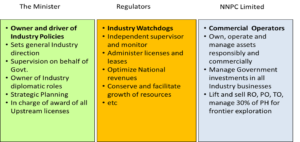
Figure 1: PIA 2021 Key Institutions (Source: PIB 2020 Team)
The Ministry is key to creating and adding value in the PIA era with pragmatic petroleum policy to unlock petroleum resources in Nigeria for sustainable development. That the lack of a full Minister of Petroleum Resources outside the Presidency hinders the Ministry of Petroleum to restructure, rekindle, and rebrand to facilitate impactful implementation of PIA 2021. Perhaps this assertion is conjectural, yet comprehensible as the 2023 election remains on the radar. I am hopeful that whoever becomes the President of Nigeria in 2023 will not be tempted to not appoint a full minister taking charge to fashion and implement effective petroleum policies for managing into the future with respect to petroleum resources development for value creation as envisaged in the PIA 2021.
PIA 2021 and Prospective Petroleum Value Chain Optimisation
The complexity of the petroleum value chain is obvious from upstream downstream through the midstream, yet the opportunities to add value and create value along the value chain is enormous for countries that are posterity minded. Of course, for years, because of transportability advantage, natural gas value chain with its complexity and fragility, has been unable to ramp up its value addition process in comparison to the liquid petroleum value chain. The advent of LNG technology, to a large extent, began to transform natural gas from its regional and local market status to an internationally tradeable commodity, though the speed of the transformation dampened a little, because of the emergence of unconventional gas resources development in the US.
Additionally, as natural gas becomes the global transition fuel in the pursuant of the net-zero carbon emission target by 2050, the global demand for gas is projected to transcend the demand growth for liquid petroleum. Thus, country like Nigeria, with over 200 TCF of natural gas reserves, needs to be strategic in balancing domestic gas market prospects and export gas market in the emerging decarbonization era. The PIA 2021, drawing from the National Natural Gas Policy 2017 and the Petroleum Policy 2016, has legislatively opened the door for investors to take advantage of the intentional aim to emphasize value creation and output expansion as the basis for government revenue earnings rather than the traditional rent seeking mechanism.
Upstream Hydrocarbon Investment Prospects
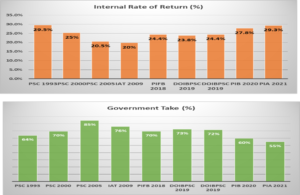
As previously discussed in many fora, the fiscal framework in the PIA is generously in favor of upstream petroleum investments for hydrocarbon development, especially the offshore assets under contractual agreements (See Figure 2). This is critical if natural gas and petroleum value chains are to be optimized and sustained. The PIA 2021 offers a relatively progressive fiscal regime design, adequately, balancing rewards with risk and simplicity of petroleum tax administration. It jettisoned a single tax mechanism for a dual tax system to protect government access to revenue from hydrocarbon price volatility. Yet the government embraced, graciously, the jettisoning of flat royalty for a progressive royalty scheme based on terrain and let go of the traditional emphasis on early revenue extraction for delayed rent extraction instruments.
The uncertainty imposed by the protracted industry reform process has gradually given way to direct investment inflow to Nigeria. Ambiguity has given way to transparency and accountability thereby facilitating a lot of new investment positivity in the IOC community. Additional investments, notwithstanding the divestments from onshore and shallow water assets, which bring opportunities to local investors, are reportedly being contemplated. Commercialization of the National Petroleum Company, if operationally apolitical, has been positioned to be a catalytic agent of change in its partnership with investors and shielding the government to large extent from risk-averse stereotype. Evidence abounds within the space of one year of the potential investment opportunity NNPC Limited can achieve, again, if apolitical. The caveat remains, however, the possibility of extremely high exposure to failure, perhaps because of limited experience and over zealousness, more so with, an overtly, political Board of Director. I stand corrected!
Prospects in Domestic Gas Markets
Launching a domestic gas market from scratch has traditionally required one or more large “anchor” customers to undertake to purchase enough gas to justify the significant investments required to build the requisite pipeline infrastructure. An “anchor” project is a large project that provides the economies of scale that may justify the investments in capital-intensive gas infrastructure, which is then available to smaller users. While the emerging global decarbonization philosophy, may expand the global LNG markets, the urgent need to expand power generation in Nigeria makes the domestic gas and power value chain as much a critical feature in managing into the future of natural gas development for sustainable economic development.
Additionally, gas-based industrialization parks offer great opportunities to expand domestic gas markets with the clamor for energy corridor in the Niger Delta as well as integrated industrial parks in the six geopolitical zones. It is basically about maximizing the economic value impact of natural gas beyond just replacing oil revenue with gas revenue. Figure 3 shows the prospects for gas development, PIA 2021 intentionally designed framework to unlock in the commercialization scheme as envisioned by its framers in accordance with the National Natural Gas Policy of 2017. Gas-to-power offers end-use options to expand domestically produced natural gas and increase power supply to meet domestic demand.
PIA 2021 addressed squarely, several impediments to natural gas development including infrastructure development, inappropriate gas pricing, limited legal framework and underdeveloped gas markets, making room for expanded domestic gas market. Several natural gas development enablers in the PIA include the establishment of an independent downstream and midstream regulator with specific role for natural gas; incentives targeted for gas development–no hydrocarbon tax and no royalty by value, low royalty consolidated across terrain–and there is a deliberate effort for investment in infrastructure funding and coordination in the use of existing infrastructure. There is a specific provision for gas infrastructure funding in the PIA to unlock domestic gas market potential in form of gas to-power, gas-based industrialization without jeopardizing high-gas-value export.
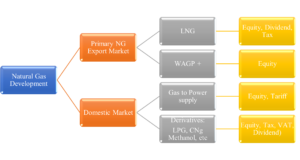
Figure 3: Natural Gas Development Prospects (Source: Natural gas Policy Document, 2017)
High Value Export Market
The LNG value chain starts upstream with exploration and production operations. It then proceeds through the midstream stage of processing and transportation, and then the downstream phases of liquefaction to shipping and distribution to the consumer. Government and private sector partners need to develop trust and firm long-term commitment so that relationships between partners in each part of the chain can endure. To build this trust, compromise and cooperation are critical as is a cooperative rather than adversarial approach to negotiations.
Safeguarding that LNG projects create value for all participants requires that each link in the chain fully performs its contractual obligations within a framework of trust and commitment. Failure of one link adversely affects other key links. Contracts must set forth integrated rights and responsibilities and must set up the long-term relationships which require joint planning, coordination, and flexibility. Successful value chain management should help safeguard completion within budget, timeliness of startup, safe and reliable operations within and across links, and the ability to overcome changes in the market and operating conditions.
LNG projects are typically executed by joint venture entities with more than one sponsor and with multiple project participants. An appropriate structure will enable entities, often with different aims, such as state-owned entities and private sector companies to comfortably participate in the project. Private sector companies could be energy companies, utilities, and, as is increasingly the case, investors from the financial community. If a project’s structure is weak or overly complicated, the sponsors may struggle to attract buyers for their product as buyers will be evaluating project risk when deciding whether to enter a sales contract. The structure can impact the financing to the extent that the sponsors may be charged a higher price for any debt that is raised, or it may even prevent the project sponsors from attracting funding.
It is important to understand Natural gas liquefaction projects require considerable capital investment and involve multiple project participants. As a result, the projects typically need to have long, productive lives. Risk needs to be properly allocated and functions for the project participants defined to allow debt to be paid off and to generate sufficient returns for investors. Each project would be expected to produce LNG over a period which could span 20-40 years, so it is important to structure the project correctly from its inception to anticipate project risks over time and to avoid misalignments between stakeholders and other risks to the project’s success.
Finally, the price of natural gas to end-users — domestic and diaspora — must be balanced between the cost of supply and what is affordable for consumers otherwise, consumers will not switch to gas, when other alternatives are in place and/or available. The price level must be sufficient to demonstrate to the consumer adequate value that overcomes the risks and costs of converting to natural gas from the incumbent fuels (diesel, fuel oil, etc.). The fuel-switching economics must be favorable in the long term, which means, first and foremost, the price difference between the delivered cost of natural gas and the incumbent fuel must be strong over the life of investments by consumers and suppliers. Hence, the Authority has been mandated to develop a pricing framework to optimize the natural gas value chain. Let me add, however, that the mandate is not for the authority to set the price.
Concluding Remarks
Many of my contemporary energy experts in Nigeria seem overtly disconcerted with the optimistic view I have narrated very so often about PIA 2021 attributes, deliverables, and features with respect to its potential to enhance value addition and value creation in Nigeria. Indeed, I can understand such discrepancy in judgements, because the of challenges and the outcomes of many good plans that have failed in the past to achieve noble goals and objectives. The key reason for my optimism, however, is because I am very aware of the intentions of the framers, through learning, listening as well as leading the dialogues on PIB from 2009 – 2021.
Further, the PIA governance and institutional framework illustrated in Figure 4, also strengthens my confidence regarding my assertions on PIA intentions and possibilities. The PA 1969, to a large extent, was misapplied majorly over the years with the unusual political power, inadvertently, conferred on an individual, the Minister of Petroleum, with consistent geopolitical implications that still discombobulated Nigeria to date. To the extent that many modern Presidents of the Republic of Nigeria held the sway over but one juicy and powerful portfolio, the petroleum portfolio. This was what informed the intentional institutional empowerment, enshrined in PIA 2021 as against the personality governance mindset in the PA 1969. As always, I stand corrected!
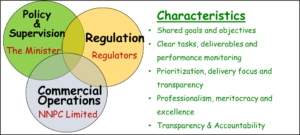
Figure 4: PIA 2021 Governance and Institution Accountability (Source: PIB 2020 Team).
SOURCE: The ValueChain